The UK-India trade deal is live. What it changes when you pay Indian suppliers
The UK-India trade agreement came into force on 15 July 2026. What it changes for UK businesses buying from India, and the cost it leaves alone: the payment.
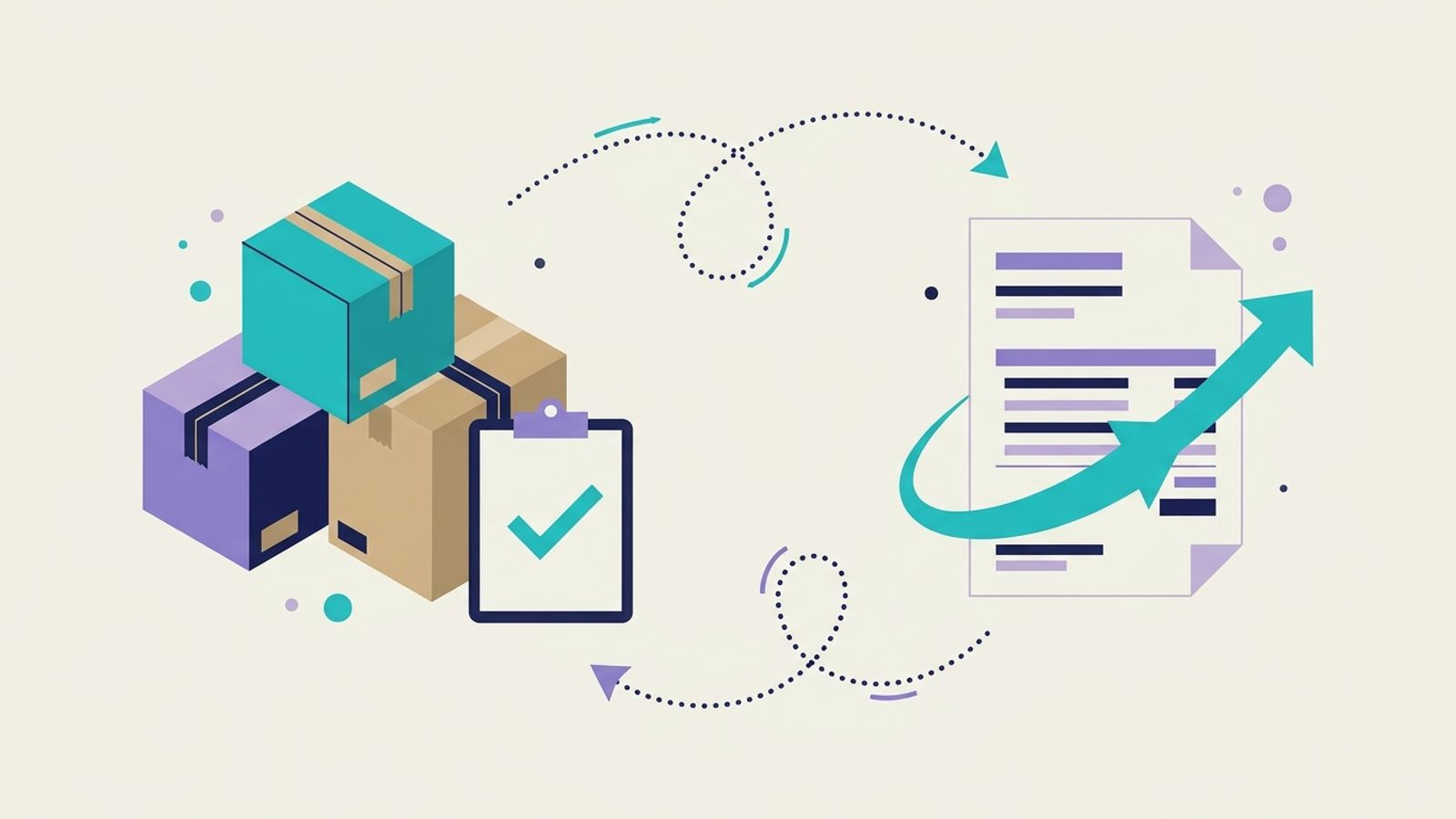
Your Indian supplier's account manager mentions the trade deal on a call: things should get cheaper for you now. Maybe. If you import goods, the agreement can take customs duty off your landed cost, but only after some paperwork. If you buy software, design or support from an Indian agency, it changes very little about what you pay. And on every invoice, goods or services, the money still has to get from your account to theirs, which the deal does not touch.
Here is what came into force, what it means on the paying side, and what to check before your next order.
What came into force on 15 July 2026
The UK signed the Comprehensive Economic and Trade Agreement (CETA) with India on 24 July 2025, and it entered into force on 15 July 2026, according to GOV.UK's UK-India Trade Deal page. A separate Double Contributions Convention on National Insurance came into force the same day.
The government's announcement says 99% of Indian goods entering the UK are now either duty free or at a reduced tariff, and puts UK-India trade at £48 billion in 2025. For a UK buyer, three parts of the package matter: lower customs duty on qualifying goods, a National Insurance change for some seconded employees, and easier temporary travel for professionals delivering services.
If you import goods, the saving is not automatic
The duty cut applies only to goods that originate in India under the agreement's rules, and only when you claim it. GOV.UK's guidance on paying less Customs Duty under a trade agreement sets out the steps: find the commodity code, check the rules of origin for that code in the Trade Tariff tool, then check which proof of origin you can use. If you do not claim, or the goods do not qualify, you pay the normal rate.
Shipped from India is not the test. The Department for Business and Trade's rules of origin guide gives three routes: goods wholly obtained or produced in the UK or India, goods made entirely from originating materials, or goods made with imported inputs that meet a product-specific rule, such as a change in tariff classification or a minimum share of qualifying value. Goods that are only transhipped through India do not qualify. A supplier that buys components from a third country may need to work through the product-specific rule before it can tell you where it stands, so ask early.
Two more details from GOV.UK. If you paid full duty and later obtain valid proof of origin, you may be able to claim some or all of it back. And India is leaving the Developing Countries Trading Scheme after a two-year transition, so if you claim reduced duty under that scheme today, check which route will apply to your goods.
Your payment records are now customs records
This is the part that reaches your finance team. When you make a preferential claim, GOV.UK says you must keep a copy of the import declaration, the proof of origin and supporting documents, including details of the purchase, cost, value and payment for the goods, for at least four years. HMRC may check.
In practice each import should tie back to a supplier invoice and a payment record showing the same amount. A payment that arrives short because a bank along the route took a deduction, or one transfer covering several invoices with no breakdown, makes that trail harder to follow. A few habits help:
- Put the supplier's invoice number in the payment reference, every time.
- Keep the payment confirmation from your bank or provider with the invoice and the import declaration.
- When one transfer pays several invoices, keep a remittance advice listing each invoice and amount.
- Ask the supplier to confirm it received the full amount, and note any shortfall with the reason.
Our post on why your Indian vendor received less than you sent explains where short payments come from, and the supplier checklist covers what to agree before the first payment.
If you buy services, little changes on the invoice
Most UK businesses paying India are buying services: software development, design, customer support, bookkeeping, marketing. Tariff preferences are claimed on goods, by commodity code. An agency's monthly retainer does not pass through customs, so there is no duty for the deal to cut.
VAT on those services follows HMRC's place-of-supply rules in VAT Notice 741A, which sets out the reverse charge for services received from outside the UK. Nothing in the government's summaries of the deal changes that, and the notice has not been updated since September 2022. If you are unsure how the reverse charge applies to you, ask your accountant.
The deal's services and business mobility provisions are mostly about access: UK firms selling into India, and professionals travelling for a short time to deliver a service. If your Indian supplier plans to send staff to your office, GOV.UK's business mobility explainer is the place to start.
Indian staff working on site: the National Insurance change
The Double Contributions Convention matters if an Indian supplier sends its own employees to work in the UK for a while, say to run an implementation at your office. Under the convention, someone who lives in India and works for an India-based employer can be sent to the UK for up to 60 months and keep paying into India's scheme instead of paying UK National Insurance, according to GOV.UK's DCC explainer. HMRC's National Insurance manual confirms it entered into force on 15 July 2026 and does not apply to self-employment.
So it does not cover the freelancers and contractors you pay directly from the UK, and it covers contributions only: the explainer says nothing in it changes the immigration rules. For the payment side of working with individuals in India, see our post on paying contractors in India from the UK. Whether someone counts as an employee is a question for an adviser.
What the deal leaves alone: the cost of moving the money
None of the government summaries we read mention bank charges or exchange rates on a payment. Whatever the duty on your goods, the invoice still has to be paid, and the sender fee, the FX markup and any deductions along the route are the same as they were on 14 July.
Here is what sending a $25,000 payment to India costs with four providers, from their published pricing as it stands in our calculator:
| Provider (plan) | Pricing basis | Sender cost on $25,000 |
|---|---|---|
| Wise (Business) | USD to INR bank-funded quote, as checked 19 Sep 2026 | $111.63 |
| Revolut (Basic) | £5 transfer fee + 0.6% above £1,000 | $148.66 |
| Airwallex (Business) | $25 fee + 1% for INR | $275.00 |
| Payoneer (Business) | From 1.2%, up to $20 minimum (lower-bound estimate) | $300.00 |
Those costs repeat on every payment, all year, and nothing in the trade deal changes them. Our post on the hidden FX markup shows how to find the part that never appears as a fee.
A checklist for your next order from India
- Find the commodity code for each product you import, and check the India preference and its rules of origin in the Trade Tariff tool.
- Ask your supplier for the proof of origin the tool says you can use, before the goods ship.
- If you claim under the Developing Countries Trading Scheme today, check how India's exit from it affects your goods.
- Put the invoice number on every payment and keep the payment confirmation with the import paperwork for four years.
- Look at what each payment costs you to send, separately from what the goods cost to land.
For complex goods or high volumes, a customs broker can confirm the origin position for your products. This post is general information, not customs or tax advice.
Where Winvesta fits
Winvesta does not handle customs, origin claims or VAT. What we change is the payment. If you hold US dollars in a business account, you send us one USD transfer with the invoices attached and we split it across your Indian vendors, with no sender fee and no markup. Each vendor gets the full invoice amount in INR in their bank in one to two days, with an e-FIRA and remittance advice for their records. We are live on USD to INR today, so you need US dollars to send. Tell us where you bank and we will set you up.
Frequently asked questions
Does the UK-India trade deal reduce the cost of paying an Indian supplier?
Not the payment itself. It can cut customs duty on qualifying goods, but the sender fee, FX markup and any deductions on the transfer are unchanged. None of the government summaries of the deal mention them.
When did the UK-India free trade agreement come into force?
On 15 July 2026. It was signed on 24 July 2025. The Double Contributions Convention on National Insurance came into force the same day.
Do I get the lower tariff on goods from India automatically?
No. You claim it on your import declaration, the goods must meet the rules of origin, and you need a valid proof of origin. Without a claim you pay the normal rate. If you later get valid proof, you may be able to reclaim some or all of the duty you paid.
How long do I keep records for a preferential claim?
At least four years, according to GOV.UK: the import declaration, the proof of origin and supporting documents, including details of the purchase, cost, value and payment for the goods.
Does the National Insurance agreement cover freelancers I pay in India?
No. It covers employees of India-based employers sent temporarily to the UK, for up to 60 months, and HMRC's manual says it does not apply to self-employment.